Position Zero on Google: How to Become the First Answer (and the AI's Too)
The short answer: position zero is the answer Google places above all results, lifted from a page that already ranks well and contains a passage that answers the question directly. The formula: a heading phrased as the question, a self-contained two-to-four-sentence answer right beneath it, then the elaboration. And the bonus that became the point - that exact passage is what AI answers quote.
Someone searching "how long does a website take" doesn't see ten blue links first - they see an answer. Somebody wrote it, Google picked it, and their site got the most coveted spot in the results: above position 1. The trade calls it position zero, and the good news is that it's earned by writing, not by magic.
What "Position Zero" Actually Is
It's the umbrella name for the answer boxes Google shows before the regular results: an answer paragraph (featured snippet), a list of steps, a comparison table, or the "People also ask" row. The box is lifted automatically from an existing page - with a link to the source - so it isn't another "result", it's Google's recommendation of the answer.
And since Google now also shows AI answers above the results, the mechanism only got stronger: those answers are built and cited from the same pages. Whatever is written right for position zero is written right for them too.
How Google Picks the Answer
Two conditions, in order:
1. The page is already in the game. The answer is lifted almost always from pages ranking high for that query. There's no shortcut around ranking - if the site doesn't show up on Google at all, start there, not here.
2. The page contains a passage that answers directly. Google looks for a paragraph, list or table it can lift as-is and present as a complete answer. A page that answers "roughly, across eight paragraphs" loses to a page that answers in one precise paragraph.
How to Write a Paragraph That Gets Picked
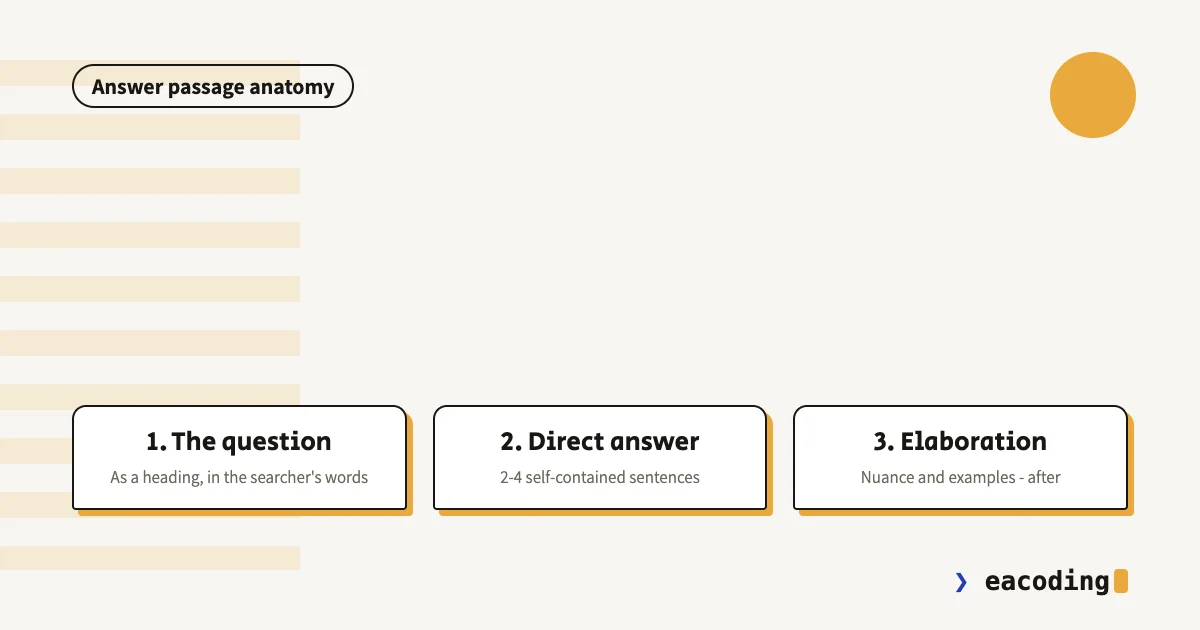
This is the formula I work with - and exactly what you saw at the top of this article:
- The heading is the question, in the searcher's words. "How much does a WordPress site cost?", not "Digital solution pricing".
- The answer sits right beneath, standing alone. Two to four sentences someone can read with zero extra context and understand. No "as mentioned above", no warm-up.
- Then the elaboration. All the nuances, examples and caveats - after the answer, not instead of it.
- The answer's shape matches the question's shape. "How" = a numbered list of steps; "what's the difference" = a table; "what is" = a paragraph. Google lifts the structure, so give it structure.
- One idea per passage. A paragraph answering two questions gets picked for neither.
And That's Exactly What AI Assistants Quote
The reason this article isn't titled only "how to reach position zero": the same work serves the new channel. A chatbot assembling an answer searches the web for the same thing Google does - a clear passage that answers the question - and quotes whoever supplied it. The only difference is that in an AI answer several sources sometimes share the stage, which makes direct phrasing and clear attribution (who you are, since when) worth even more. How to get those assistants recommending you - in the full guide.
What Doesn't Work
Stuffing an "FAQ" into every page without the answers actually answering - Google reads the content, not the intention. Phrasing questions nobody asks because they're convenient for you. Expecting position zero from page 3 - the foundation first, the crown later. And chasing every query - answering five questions your customers actually ask excellently beats answering fifty poorly.
A Short Pre-Publish Checklist
- Is the heading phrased as a real searcher's question?
- Does the direct answer sit right beneath it, in 2-4 self-contained sentences?
- Does the shape match - a list for "how", a table for comparisons?
- Does the page rank for the query at all? (If not - start here)
- Does the page carry credibility markers - who wrote it, when it was updated?
Bottom Line
Position zero isn't a trick but a prize for clarity: a page that's already relevant, with a passage that answers the question the way a person would want it answered. Write like that - and a pleasant fact emerges: Google, the AI answers and your customers all prefer exactly the same thing.
Want your site's content to start answering questions instead of making statements? Talk to me - we'll build the list of questions worth answering together.
FAQ
What is position zero on Google?
Position zero (the featured snippet) is the answer box Google shows above the regular results: a paragraph, list or table lifted from one of the ranking pages, with a link to it. These days Google's AI answers join it, built from exactly the same pages.
How do you write a paragraph Google picks as the answer?
Open the section with the question as people search it (as a heading), and answer directly beneath it in two to four self-contained sentences - then expand. For list or comparison questions, prefer a numbered list or a table.
Can you reach position zero without ranking on page one?
Almost never. Google lifts the answer from pages already ranking well for the query, so the foundation - clean indexing, relevant content, a fast site - comes before any phrasing. Position zero is a prize for a good answer on a page already in the game.
More from the blog
Is an Accessibility Plugin Enough to Comply With Israeli Law?
A floating accessibility widget doesn't make a site comply with IS 5568. What the widget really does, where it fails, why it sometimes hurts, and what does cover you.
7 min readHow to Write a Website Accessibility Statement in Israel (With a Template)
The accessibility statement under Regulation 35: what the regulations require in it, where to put it, what never to write, and a template you can adapt to your site.
7 min readHow Do You Back Up a Website Properly? What, Where, and How Often
A backup that actually saves you: what must be in it (not just files), where never to store it, how often by site type - and how to know it works at all.
6 min read
Reaching me is the easy part.
A few lines in the form if you prefer writing - or straight to the channel you already use. Either way, it's me answering.